

The Ripple Effect: What We Teach When Standards Slip
As a child, I remember choosing ‘Antlions’ as a Year 4 project topic and proceeded to spend hours studying these fascinating creatures. Unfortunately, when it came to submitting my project, it was underwhelming to say the least. Thankfully, my teacher didn't settle for my mediocrity. They had a direct conversation with me that impressed on me for life the importance of personal effort, integrity, and excellence.
‘When we allow our children's standards to slip (whether academic, behavioural, or ethical), we are often inadvertently delivering a set of silent lessons that can shape their adulthood.’
This might take the form of:
- Being comfortable getting them to their Saturday sports fixture late.
- Delivering items to school that they forgot.
- Turning a blind eye to their school uniform being worn incorrectly.
- Allowing them to speak rudely or be inconsiderate.
- Being okay with them completing homework in an untidy manner.
‘Think of it like a small crack in a windshield: it’s much easier (and cheaper) to fix before it shatters the whole glass.’
Maintaining High Standards - Why the "Small Stuff" Matters
1. Establishing a Predictable Baseline
Children thrive on boundaries. When parents and teachers address minor issues consistently and model high standards, it creates a "safety net" of expectations. If a rule only applies "sometimes," the child spends more energy testing the limits than following them.
2. Accountability is Negotiable
When deadlines become "suggestions" and rules become "guidelines," the concept of personal responsibility erodes. Teaching them to own their mistakes and meet their commitments now prevents much harder lessons later in life.
3. Preventing "Behavioural Creep"
Small behaviours rarely stay small. Psychologically, if a child learns they can bypass a minor boundary without consequence, they are naturally inclined to test the next level.
4. The Illusion of "Good Enough"
The professional world rarely rewards "almost done" or "mostly correct." When we accept subpar work or behaviour, we risk sending children into adulthood without a realistic internal compass for quality.
Maintaining high standards doesn't mean being a perfectionist or a drill sergeant. It’s about consistency over intensity.
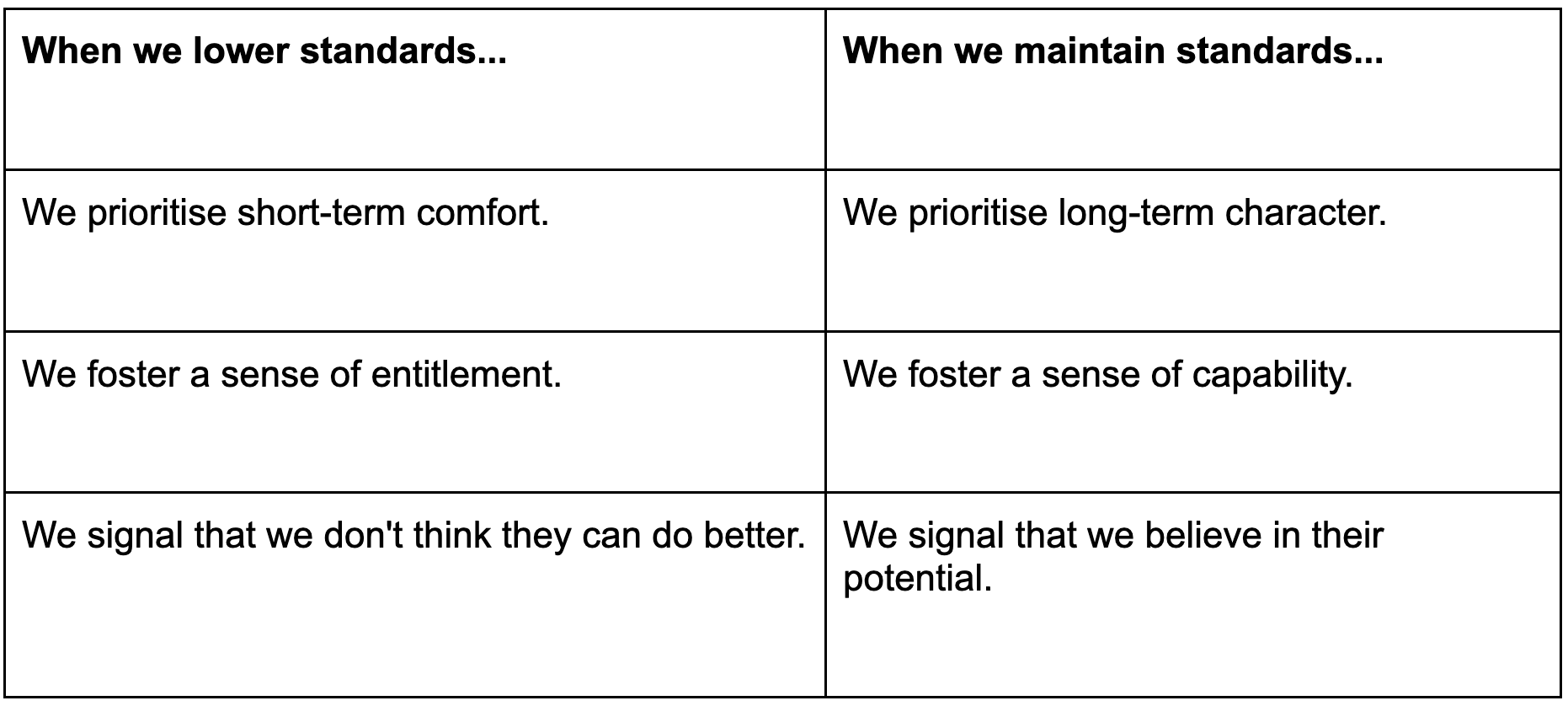
The Contrast
Moving Forward Together
Our children are capable of remarkable things, but they often need us to hold the flashlight so they can see the path. By being consistent and both modelling and holding them to a high standard, we aren't being "tough" - we are being advocates for their future selves.
Peter Grimes | Headmaster